
Preparing your Construction Equipment for Transport
September 9, 2021
Route planning for heavy equipment transport means matching the machine to the right trailer, checking route restrictions, confirming permits and escort needs, and preparing the equipment so it can move safely and efficiently. For many shipments, the biggest variables are loaded height, weight, width, attachments, road restrictions, and delivery-site access.
Before booking, confirm the carrier is experienced with the route, properly insured for the load, and equipped for any permit, escort, or loading requirements.
On this page:
What route planning includes | How to choose the right trailer | What route factors matter | Preparation checklist | Pricing guidance | FAQs
Before you can move heavy equipment, route planning has to happen before the truck is dispatched. That includes checking dimensions, trailer fit, bridge and overhead clearances, permit needs, loading method, and whether the pickup and delivery sites can handle the equipment safely. If you are still working through trailer fit, our one of a kind software can help identify what trailer type may work based on your equipment make and model.
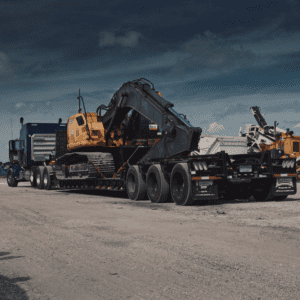
In practical terms, a good route plan answers a few basic questions early: What trailer will the machine ride on? Will the loaded height or width trigger permits or escorts? Can booms, buckets, or attachments be removed to reduce cost or complexity? And are there any access issues at pickup, along the route, or at delivery? This is especially important in interstate machinery transport, where permit rules and route restrictions can change from state to state.
How do you choose the right trailer for the route?
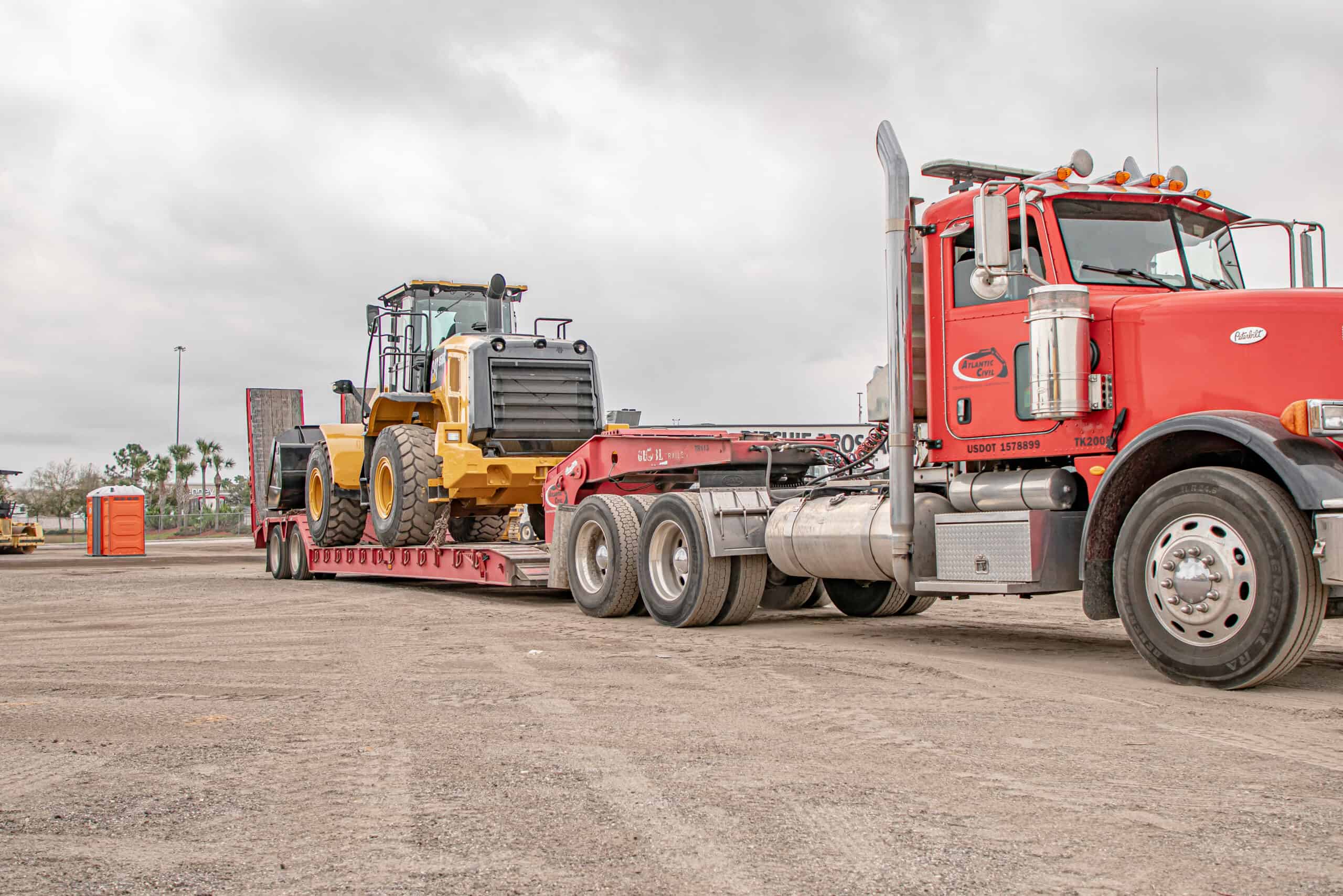
Trailer choice is one of the first route-planning decisions because it affects height, loading angle, weight distribution, permit exposure, and overall cost. Flatbeds work for many legal-size loads, step decks help when cargo height is the issue, and lowboys are often used when a machine is too tall or heavy for higher-deck options.
Preparing your construction equipment for transport requires careful consideration before choosing what type of trailer it will be transported on. A flatbed deck usually rides higher off the ground, while a step deck trailer can provide additional height clearance. If the machine is still too tall, a lowboy may be the better fit.
For deeper trailer comparisons, see step deck trailer dimension, weight, and load capacity and answers to your lowboy trailer questions.
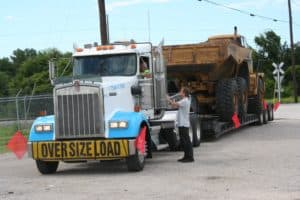
- Flatbed: Best for equipment that stays within legal height and weight limits.
- Step deck: Useful when additional loaded height clearance is needed.
- Lowboy: Often the better option for taller, heavier, or more specialized heavy haul loads.
If your load is too tall to transport using a step deck trailer, you can opt for the lowboy option by swapping out trailers. You gain more clearance with this trade-off, but it can also increase transport cost. Position any booms properly, retract parts that affect height or length, and remove attachments that might make the shipment oversized.
What route factors matter most for heavy equipment transport?
The route itself can change trailer choice, scheduling, and price. Even when the machine can be loaded, the trip may still require additional planning because of permits, escorts, urban congestion, delivery-site limits, or restricted roads.
Permits, dimensions, and legal limits
The rules around transporting construction equipment may sound straightforward, but legal size and weight limits vary by state and sometimes by route. Height, width, gross weight, axle configuration, and overhang can all affect whether permits are required.
Escort and safety requirements
Some routes may also require escort vehicles, route restrictions, banners, lights, or travel-time limitations when the shipment exceeds legal limits. For a closer look at escort requirements and safety roles, read what pilot cars do in heavy haul transportation.
Pickup and delivery access
Route planning does not stop at the highway. Tight yards, soft ground, narrow gates, overhead obstructions, and limited turning space at either end of the move can affect how the equipment is loaded, secured, unloaded, and positioned onsite.
Tips for avoiding wide load designation include:
- Over-height: Retract, or even remove the boom or bucket. Sometimes it’s worth another load to avoid wideload designation.
- Overweight: Shipping body separate from attachments reduces weight and can be over 40,000 pounds without risk of being designated as a “wideload”. You may also try removing the tracks if you are going to make your machine too long in length anyways; most states give more than enough room at 53 feet (longer is not typically an issue).
Most shippers try to avoid a wide or oversize designation unless the machine truly requires it, because permits, escorts, route restrictions, and scheduling rules can add cost and complexity.
How should you prepare heavy equipment before transport?
Once trailer and route decisions are made, preparation reduces the chance of delays and damage. Start with the owner’s manual, confirm how the machine will be loaded, and protect any components that could be damaged in transit.
When preparing your construction equipment for transport, it is important to know which parts could be damaged or broken off. Things like levers, knobs, and gauges are often vulnerable during shipping and may need protective wrapping.
Do you want the driver to load the machine? Many drivers who handle heavy machinery are comfortable loading and securing equipment, but if your crew will handle loading, that should be scheduled in advance so the route plan and pickup window stay on track.
Preparing your construction equipment for transport and prevent unexpected damage by following these simple steps:
- Retract booms and remove buckets or attachments when they increase loaded height, width, or length.
- Disconnect batteries so machines are easier to restart upon arrival.
- Latch the doors. Doors will flap in the wind if they’re not properly closed. If the door latch won’t work, zip tie the door shut.
- Wash the machine. Dirt and debris can obscure handholds and tie-down points.
- Cover stacks, openings, or exposed components when needed to keep out dirt, dust, and road debris.
- Confirm tie-down points, pickup access, delivery access, and who is responsible for loading and unloading.
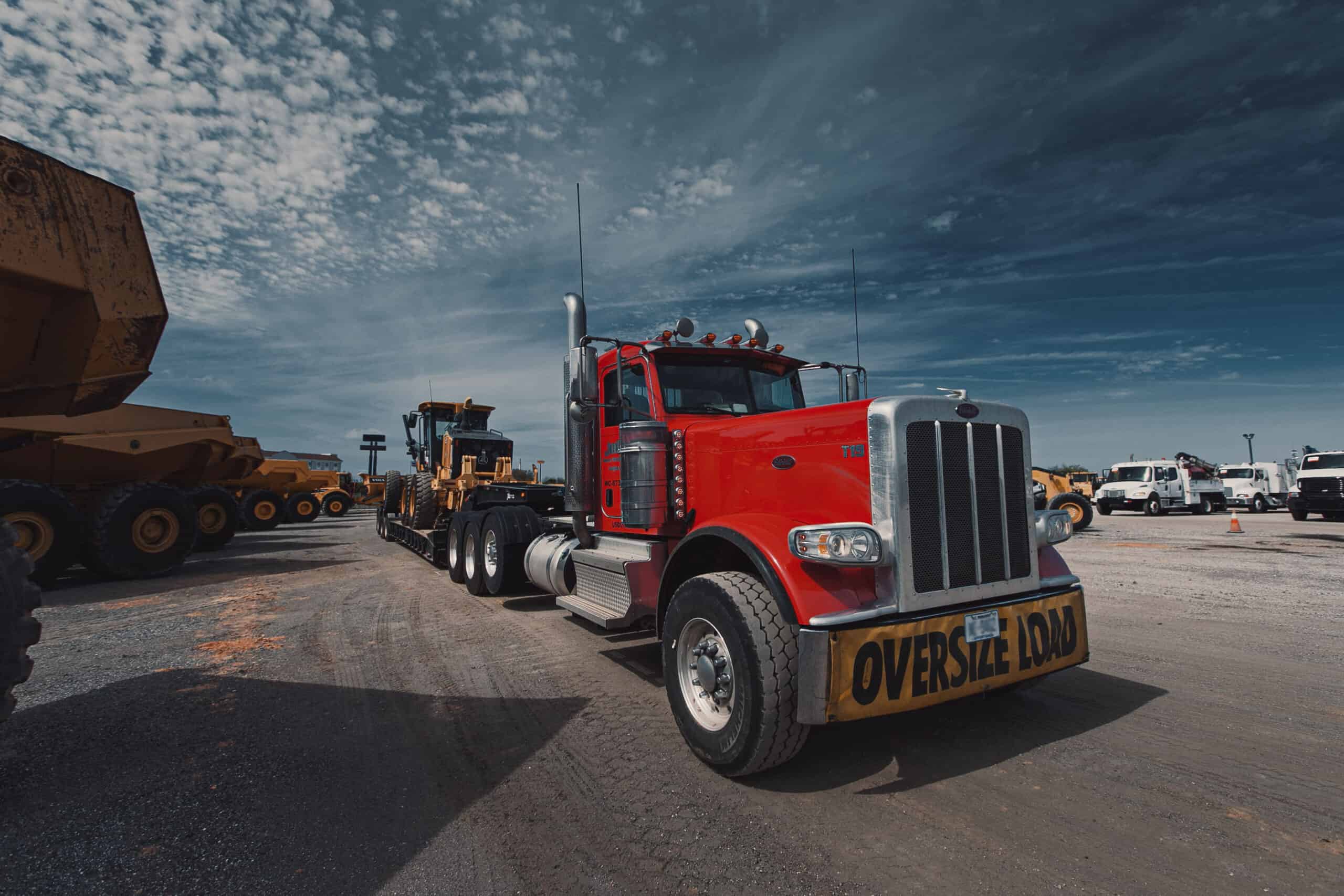
If your equipment is traveling as an oversize load, you’ll need safety banners, lights and signs. Your transport provider should have all of this, but just double check to make sure.
What affects heavy equipment transport pricing?
Pricing usually depends on the machine’s dimensions and weight, the trailer required, the route, permit or escort needs, loading and unloading conditions, and how quickly the shipment needs to move. Removing attachments or choosing a more efficient route can sometimes reduce complexity, but oversized or overweight moves generally cost more than legal-size shipments.
- Trailer type and availability
- Loaded height, width, and gross weight
- Permit, escort, and timing restrictions
- Distance, tolls, and route difficulty
- Pickup and delivery-site access
- Whether attachments ship on the same trailer or separately
Let VeriTread Help You!
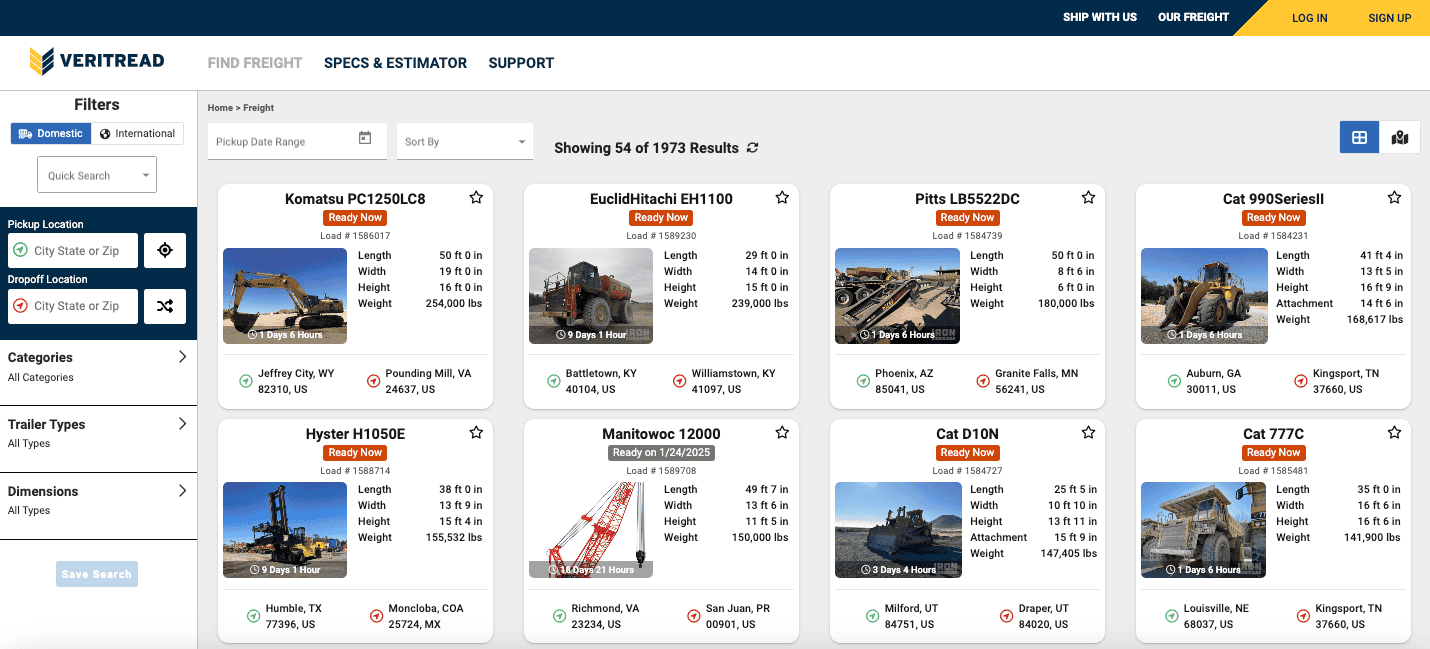
VeriTread is your go to solution for shipping your freight. We can help you compare options for transporting freight across North America and line up experienced carriers for the job. We can also help with trailer selection, route considerations, and the quoting process for heavy equipment shipments.
VeriTread makes it easy to get reliable freight quotes from the experts in equipment transport. The VeriTread Shipper quote process is a simple way to start planning your move:
- Enter a Manufacturer & Model
- Verify or Edit Your Machine Dimensions
- Enter Pickup & Drop Off Locations
- Your Quote is Ready!
Getting started with VeriTread is easy. You can visit our contact form or call (800) 880-0468 or (863) 226-0903 for international calls.
Frequently asked questions
What is route planning for heavy equipment transport?
Route planning for heavy equipment transport is the process of matching the machine to the right trailer, checking dimensions and road restrictions, confirming permit or escort needs, and preparing the load for safe pickup, transit, and delivery.
When do you need a step deck or lowboy trailer?
A step deck may work when extra height clearance is needed compared with a flatbed, while a lowboy is often the better option when the machine is still too tall or heavy for a higher-deck trailer.
What can make a heavy equipment shipment oversized or more expensive?
Loaded height, width, weight, overhang, attachments, permit requirements, escort vehicles, route restrictions, and difficult pickup or delivery access can all increase complexity and cost.
How should you prepare heavy equipment before shipping?
Retract booms, remove attachments when needed, protect fragile parts, latch doors, disconnect batteries, clean the machine so tie-down points are visible, and confirm loading responsibilities before the truck arrives.
veritread products
Top Articles
Freight Types
recent posts
January 17, 2025
Understanding Equipment Transport Services
When you need to move heavy machinery, large vehicles, or other specialized equipment, finding the right transportation service can
January 17, 2025
Understanding Load Board Prices
Quick answer: Load board prices usually depend on the access level you choose, the search and rate tools included, broker-vetting
January 17, 2025
Choosing the Best Equipment Hauling Companies
Quick answer: Equipment hauling companies move heavy machinery, construction equipment, farm equipment, and oversized loads by matching the shipment to