
How to Load & Transport Heavy Equipment
March 9, 2022

Transporting heavy equipment requires the right trailer, a clear loading plan, accurate dimensions and weight, proper securement, and compliance with oversize and overweight regulations. The safest moves start with preparation, qualified carriers, route planning, and equipment-specific handling. This guide covers how heavy equipment transport works, when specialized transport is needed, how to prepare machinery for transit, legal requirements to watch, and the step-by-step loading practices that reduce risk.
Heavy Equipment Transport: Quick Answer
Heavy equipment transport is the specialized movement of oversized, overweight, or difficult-to-load machinery using appropriate trucks, trailers, securement devices, permits, and trained operators. Equipment often needs heavy haul transport when it exceeds standard freight dimensions, requires special loading or unloading, or needs route planning, escorts, or regulatory permits.
Outline:
- What is heavy equipment transport?
- When does equipment require specialized transport?
- What types of heavy equipment are commonly transported?
- How do you prepare heavy equipment for transport?
- How do you load and secure heavy equipment safely?
- What legal requirements and restrictions apply?
- What should you look for when hiring heavy equipment movers?
- What are the best practices for long-distance transport?
- How much does heavy equipment transport cost?
What Is Heavy Equipment Transport?
Heavy equipment transport is a specialized segment of freight shipping focused on moving large, bulky, heavy, or oversized machinery and components. This includes construction equipment, agricultural machinery, industrial equipment, and other loads that often exceed standard freight dimensions or require specialized loading, securement, and permits.
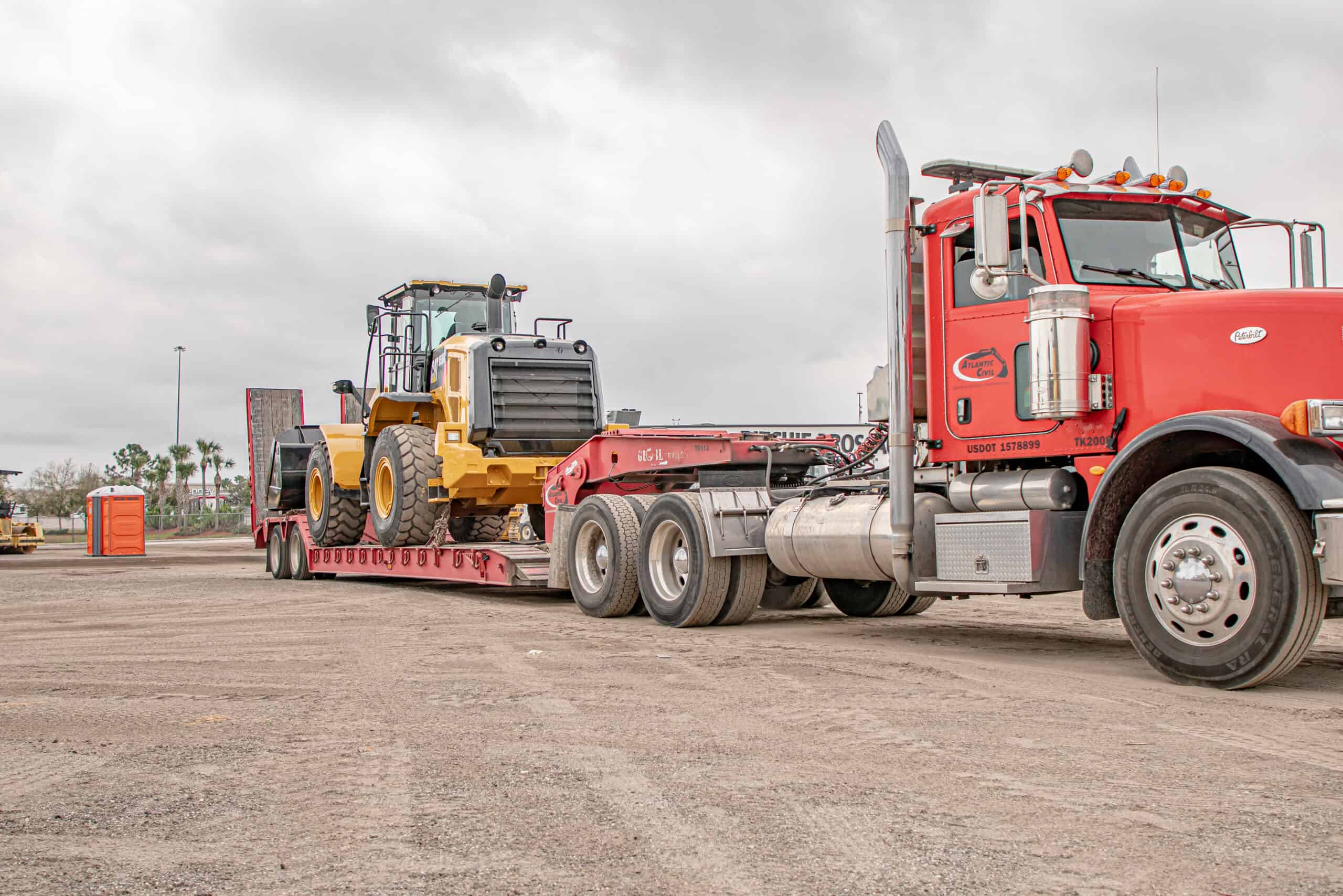
Unlike regular freight shipping, heavy equipment transport often requires specialized trailers such as flatbeds, step decks, lowboys, double drops, or RGNs, along with more route planning, equipment-specific handling, and regulatory compliance.
When Does Equipment Require Specialized Transport?
Your equipment likely requires specialized heavy equipment transport when one or more of the following applies:
- It exceeds standard freight limits for height, width, length, or weight.
- It requires specialized loading or unloading methods.
- It needs a trailer such as a lowboy, step deck, double drop, or RGN.
- It requires oversize or overweight permits, escorts, or special routing.
- It has non-standard securement or handling requirements.
If there is any doubt, confirm the dimensions, weight, and transport requirements before scheduling the move.
What Types of Heavy Equipment Are Commonly Transported?
Heavy equipment transport covers a wide range of machinery across multiple industries.
Construction Equipment
Common examples include excavators, bulldozers, backhoes, loaders, scrapers, rollers, asphalt spreaders, cranes, graders, concrete mixers, and pumps.
Commercial Equipment
This category can include generators, commercial HVAC equipment, mobile offices, and other large commercial assets that vary widely in size and shape.
Industrial Equipment
Examples include plant parts, engines, manufacturing equipment, process piping equipment, generators, and large industrial components that may be expensive, awkwardly shaped, and sensitive to improper handling.
Agricultural and Other Equipment
Tractors, combines, harvesters, irrigation equipment, mining gear, drilling rigs, and specialty vehicles may also require heavy equipment transport depending on their size, weight, and configuration.
How to Prepare Heavy Equipment for Transport
Preparation is where most avoidable mistakes start. Before any move:
- Perform a documented risk assessment: Identify what could go wrong during loading, transit, and unloading, and plan around it.
- Use PPE and site safety controls: Protect the crew and reduce avoidable exposure during loading and securement.
- Confirm dimensions and weight: Height, width, length, and weight determine trailer choice, permits, route restrictions, and securement requirements.
- Inspect the truck and trailer: Check tires, brakes, lights, hydraulics, tie-down points, and trailer rating before the move begins.
- Clean and inspect the equipment: Remove dirt and debris, note any existing damage, and confirm the machine is ready for transport.
- Check the equipment manual: Manufacturer guidance may identify transport prep steps and vulnerable components that need extra protection.
- Gather documentation: Have permits, shipping paperwork, maintenance records, and any equipment-specific notes ready.
Loading & Securing Heavy Equipment Safely
1) Designate duties
Everyone involved in loading the equipment should understand their role and be properly trained. Poor communication during loading is how damage and injuries happen.

2) Load on flat, level ground
A tilted trailer increases rollover risk and makes equipment harder to position correctly.

3) Clear the loading area
Identify obstacles and adjust your loading strategy before equipment starts moving.

4) Secure the truck and trailer
Use parking brakes and wheel chocks to prevent unwanted movement before loading begins.

5) Check the trailer deck
The deck should be clean and ready to accept the load. Clean work areas reduce avoidable loading problems.

6) Line up and approach the trailer straight on
Use a spotter if visibility is limited. Drive the machine onto the trailer slowly and center it correctly. Buckets, booms, and attachments should be lowered and tucked appropriately once loaded.

7) Secure the equipment properly
Lower and secure attachments, retract booms and buckets, lock doors and covers, immobilize the transmission where appropriate, and secure articulation points. Use the correct chains, binders, straps, anchors, blocking, and bracing for the specific equipment and trailer combination.
If needed, protect vulnerable areas from road debris and moisture. Once securement is complete, check the load again. A second inspection by another person is smarter than relying on one set of eyes.

8) Verify driver visibility
The equipment placement should not obstruct driver movement, visibility, or access to required vehicle components.

What Legal Requirements and Restrictions Apply?
Heavy equipment transport is highly regulated. Requirements vary by route and jurisdiction, but common issues include:
- Oversize and overweight permits: Required when the load exceeds legal width, height, length, or weight limits.
- Driver qualifications: Drivers need the correct CDL and experience for the load and route.
- Vehicle inspections: Trucks and trailers must be in safe operating condition.
- Cargo securement: Equipment must be secured according to applicable securement standards.
- Escort vehicles and routing: Some loads require pilot cars, restricted travel windows, signage, and pre-approved routes.
- State-specific compliance: Rules differ by state, so permit and routing assumptions can get expensive fast if you guess wrong.
Many jurisdictions treat loads as oversize when they exceed common legal dimension thresholds, and overweight restrictions often trigger additional permitting and routing requirements. Verify the exact rules for every state on the route before moving the equipment.
What Should You Look for When Hiring Heavy Equipment Movers?
Do not pick a transporter based on price alone. Vet them on capability and risk.
- Relevant experience: They should understand the type of machinery you are moving and the trailer it requires.
- Licensing and insurance: Verify both. Minimum coverage is not the same as sufficient coverage.
- Safety record and procedures: Ask about accident history, training, inspections, and loading protocols.
- Proper equipment: Confirm they have the right trailer, securement gear, and loading plan for the shipment.
- Communication: Clear quotes, route expectations, scheduling details, and escalation contacts matter.
- Detailed scope and pricing: Make sure the quote is specific about the services being provided.
Best Practices for Long-Distance Heavy Equipment Transport
- Inspect the equipment before shipment and document its condition.
- Remove dirt, debris, and loose parts that could shift or cause damage.
- Stabilize or manage fuel and fluids where appropriate.
- Prepare permits and required documentation in advance.
- Plan route restrictions, offloading requirements, and destination handling before the truck leaves.
- Keep communication clear between shipper, receiver, and carrier throughout the move.
How Much Does Heavy Equipment Transport Cost?
The real answer is still the same: it depends. Cost is influenced by:
- Fuel rates
- Time of year
- Height, weight, and shape of the equipment
- Pickup and delivery locations
- Permits and escorts required
- Trailer type and level of specialization
- Loading complexity and route restrictions
Based on the source content provided, a rough planning range is about $3 to $8 per mile, but actual pricing depends on the shipment details.
Why Choose VeriTread?
VeriTread is your go-to solution for hauling heavy equipment. We connect shippers with transport providers that can handle paperwork, select the right trailer and driver, and plan efficient routes for heavy equipment and oversized loads.
VeriTread moves thousands of machines every year and can quickly generate a reliable estimate on the go. Our extensive specs and dimensions database of 60,000+ items helps reduce uncertainty and speed up quoting.
The VeriTread Shipper quote process is simple:
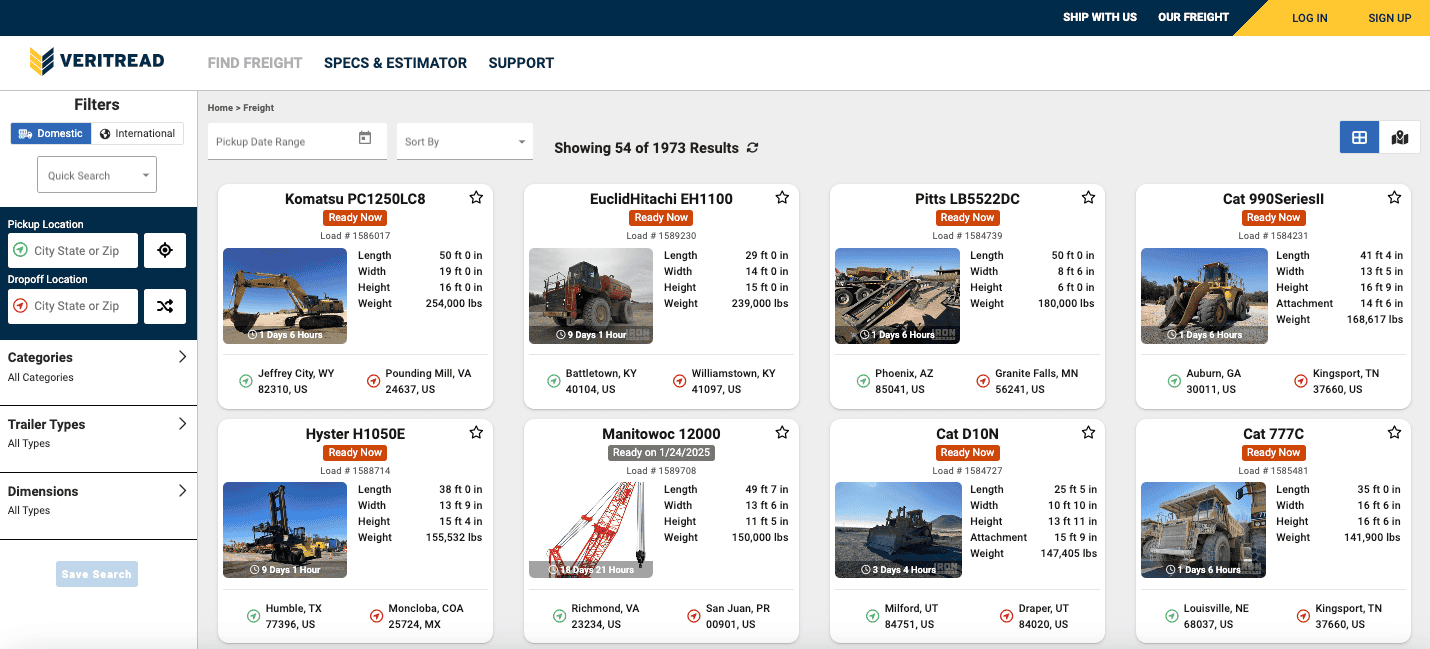
- Select Ready To Ship from the Freight Options Page
- Enter a Manufacturer & Model
- Verify or Edit Your Machine Dimensions
- Enter Pickup & Drop Off Locations
- Your Quote is Ready!
If you have questions, contact us at (800) 880-0468 or (863) 226-0903 and let our team help with your transport needs.
veritread products
Top Articles
Freight Types
recent posts
January 17, 2025
Understanding Equipment Transport Services
When you need to move heavy machinery, large vehicles, or other specialized equipment, finding the right transportation service can
January 17, 2025
Understanding Load Board Prices
Quick answer: Load board prices usually depend on the access level you choose, the search and rate tools included, broker-vetting
January 17, 2025
Choosing the Best Equipment Hauling Companies
Quick answer: Equipment hauling companies move heavy machinery, construction equipment, farm equipment, and oversized loads by matching the shipment to