
Heavy Haul Transport Safety Considerations
June 4, 2024

Heavy haul transport safety is about more than moving a large load from point A to point B. It requires accurate dimensions, the right trailer and securement method, careful route planning, permit review, and experienced operators who understand oversized and overweight freight.
Quick answer: Heavy haul transport safety means matching the route, trailer, permits, securement method, and driver qualifications to the exact size and weight of the cargo. The biggest risks usually involve load shift, clearance problems, equipment issues, and poor coordination during loading, transit, or delivery.
Whether you manage logistics every day or you are planning a one-time move, this guide covers the main safety risks, the best practices for oversized-load securement, how to reduce project risk, and what to look for when working with vetted transport providers.
Outline:
- What are the Top Safety Concerns for Heavy Haul Transport Operations?
- How do Heavy Haul Transport Companies Ensure the Safety of Their Drivers and Cargo?
- What are the Best Practices for Securing Oversized Loads During Heavy Haul Transportation?
- How Can Businesses Minimize the Risk of Accidents During Heavy Haul Transport Projects?
- What Role Does Driver Training Play in Promoting Safety Within the Heavy Haul Transportation Industry?
- Heavy Haul Safety Preparation Checklist
- What Factors Affect Heavy Haul Transport Pricing and Risk?
- FAQs About Heavy Haul Transport Safety
What are the Top Safety Concerns for Heavy Haul Transport Operations?

Heavy haul transportation involves oversized or overweight cargo, which means even a small mistake can create a large safety problem. The most common risks usually show up before the truck even leaves the pickup site.
- Load shift: If the cargo is not secured correctly, it can move during transit and affect stability, braking, or steering.
- Clearance and route conflicts: Bridges, overhead lines, narrow roads, medians, and tight turns can create risk for oversized loads.
- Equipment failure: Tires, brakes, suspension components, trailer systems, tie-down points, and loading equipment all need to be inspected before dispatch.
- Visibility and traffic exposure: Large loads reduce maneuverability, increase stopping distance, and can be harder for other drivers to judge.
- Loading and unloading hazards: Many incidents happen on-site, especially when the cargo has an uneven center of gravity or the ground conditions are poor.
- Driver fatigue and communication gaps: Long distances, permit restrictions, weather changes, and site coordination issues can increase risk if communication is weak.
How do Heavy Haul Transport Companies Ensure the Safety of Their Drivers and Cargo?
Qualified heavy haul transport companies typically rely on a repeatable safety process instead of improvising each move. That process starts with planning and continues through loading, routing, transit, and delivery.
- Specialized training: Drivers and operations teams need heavy haul-specific experience, not just a standard CDL.
- Pre-trip inspections: Trucks, trailers, tires, brakes, hydraulics, lights, chains, binders, and tie-down points should be checked before every trip.
- Preventive maintenance: Maintenance programs help reduce breakdown risk and support safer long-distance transport.
- Route and permit review: Dimensions, weight, bridge clearances, route restrictions, and state permit rules should be confirmed before dispatch.
- Clear communication: Dispatch, driver, shipper, loading crew, and delivery site staff should all be working from the same plan.
- Carrier vetting: Shippers should confirm experience, insurance, equipment fit, and the provider’s ability to handle oversized and overweight freight.
How to choose a heavy haul carrier with safety in mind
When comparing providers, focus on heavy haul experience, route-planning capability, equipment fit, communication, and whether the carrier is properly insured for the move. For a deeper checklist, see How to Choose the Safest & Most Reliable Carrier.
What are the Best Practices for Securing Oversized Loads During Heavy Haul Transportation?
Oversized-load securement should be based on the actual machine or cargo being moved. Weight alone is not enough; dimensions, attachment points, ground clearance, balance, and the center of gravity all matter.
- Know the exact specs: Confirm weight, length, width, height, axle loads, and the load’s center of gravity.
- Choose the right trailer: The safest securement plan starts with using a trailer designed for the cargo and route.
- Inspect tie-down points: Trailer anchor points, chains, binders, straps, and hardware should be in good condition and rated for the job.
- Use the correct securement method: Depending on the load, this may include direct tie-downs, indirect tie-downs, blocking, bracing, shoring, and friction mats.
- Check attachments and loose items: Buckets, booms, accessories, and removable parts should be lowered, pinned, secured, or removed as needed.
- Recheck during transit: Securement should be inspected again after loading and periodically during the trip, especially after the first miles.
How Can Businesses Minimize the Risk of Accidents During Heavy Haul Transport Projects?

Accident risk usually drops when the project team slows down the planning phase and confirms the route, equipment, timing, and site conditions before pickup.
- Start with a route survey: Review road width, bridge clearances, overhead obstacles, turning space, weight limits, and likely traffic pinch points.
- Confirm permits early: Oversize and overweight moves may require state-specific permits, route restrictions, travel windows, or escort requirements.
- Assess pickup and delivery access: Yard conditions, slopes, soft ground, gate widths, overhead utilities, and unloading space can all affect safety.
- Allow time for planning: Rushed schedules can lead to errors in securement, route review, and paperwork.
- Use escorts when required: Some moves need added traffic control, visibility, and coordination to travel safely.
- Document the plan: Everyone involved should know the cargo specs, route assumptions, permit needs, loading method, and emergency contact process.
For more on escort requirements, read Pilot Cars. For a more detailed routing overview, see Route Planning for Heavy Equipment Transport.
What Role Does Driver Training Play in Promoting Safety Within the Heavy Haul Transportation Industry?
Driver training is one of the most important safety controls in heavy haul transportation because oversized and overweight loads behave differently from standard freight.
- Vehicle handling: Drivers need to understand braking distance, turning radius, load swing, and trailer behavior under different road conditions.
- Hazard recognition: Training helps drivers spot route conflicts, weather issues, traffic problems, and loading-site hazards earlier.
- Emergency response: Operators should know what to do if a tire fails, a load shifts, a route changes, or a site becomes unsafe.
- Fatigue awareness: Long-distance transport and restricted travel windows can increase fatigue risk if schedules are not managed correctly.
- Compliance: Drivers who understand permit rules, inspection routines, and documentation requirements help reduce avoidable delays and risk.
Heavy Haul Safety Preparation Checklist
Before a heavy haul move is booked or dispatched, this checklist can help reduce preventable safety issues:
- Confirm exact machine or cargo dimensions, weight, and any removable attachments.
- Verify pickup and delivery site access, including gate width, slope, overhead clearance, and unloading space.
- Match the trailer type to the cargo and route requirements.
- Confirm whether permits, escorts, or route restrictions will apply.
- Review the securement plan, including tie-down equipment, blocking, and any special handling notes.
- Inspect the truck, trailer, and loading equipment before pickup.
- Make sure the shipper, carrier, and site contacts all have the same schedule and load details.
- Build extra time into the plan for inspections, weather, traffic, and permit-related timing limits.
What Factors Affect Heavy Haul Transport Pricing and Risk?
Heavy haul pricing and heavy haul risk often rise or fall for similar reasons. In general, more complexity means more planning, more equipment coordination, and a higher overall transport cost.
- Load dimensions and weight: Larger or heavier loads may need a different trailer setup, more axles, or more route planning.
- Permit requirements: State-by-state oversize or overweight permits can affect cost, timing, and routing.
- Escort and pilot car needs: Some loads require additional vehicles or traffic-control support.
- Route difficulty: Congested areas, bridge limitations, mountain routes, and rural access challenges can all add complexity.
- Loading method: Cranes, ramps, winching, or on-site support equipment can affect both timing and cost.
- Scheduling: Tight deadlines, seasonal demand, and restricted travel windows can change availability and pricing.
Because every move is different, the most reliable way to compare options is to use accurate specs, confirm the route conditions, and request quotes based on the actual load details.
FAQs About Heavy Haul Transport Safety
What are the top safety concerns for heavy haul transport operations?
The biggest safety concerns are load shift, clearance conflicts, equipment failure, route restrictions, driver fatigue, and hazards during loading and unloading. Most of these risks can be reduced with accurate dimensions, securement checks, route planning, permits, and experienced operators.
How do heavy haul transport companies protect drivers and cargo?
Qualified heavy haul companies protect drivers and cargo with pre-trip inspections, maintenance, route surveys, securement plans, clear communication, and trained drivers who understand oversized and overweight loads. They also verify permits, equipment fit, and escort requirements before dispatch.
What is the best way to secure an oversized load?
The best way to secure an oversized load is to match the trailer and tie-down method to the cargo’s weight, dimensions, and center of gravity. Chains, straps, binders, blocking, and friction mats should be inspected and used according to the load plan and applicable rules.
How can businesses reduce heavy haul accident risk?
Businesses can reduce heavy haul accident risk by confirming specs early, choosing the right trailer, planning the route, allowing time for permits, checking pickup and delivery access, and working with experienced carriers. Clear communication between the shipper, carrier, and site teams is essential.
When are pilot cars or escorts needed for heavy haul transport?
Pilot cars or escorts may be needed when a load exceeds state size limits, follows a restricted route, or needs added traffic control and visibility. Requirements vary by state and by route, so they should be confirmed during permit and route planning.
Do You Need Help or Have More Questions About Shipping Your Heavy Equipment?
VeriTread can help you compare options for heavy haul moves across North America. When reviewing quotes, confirm trailer fit, route planning, permit handling, and whether the transport provider is appropriately insured for the load and route.
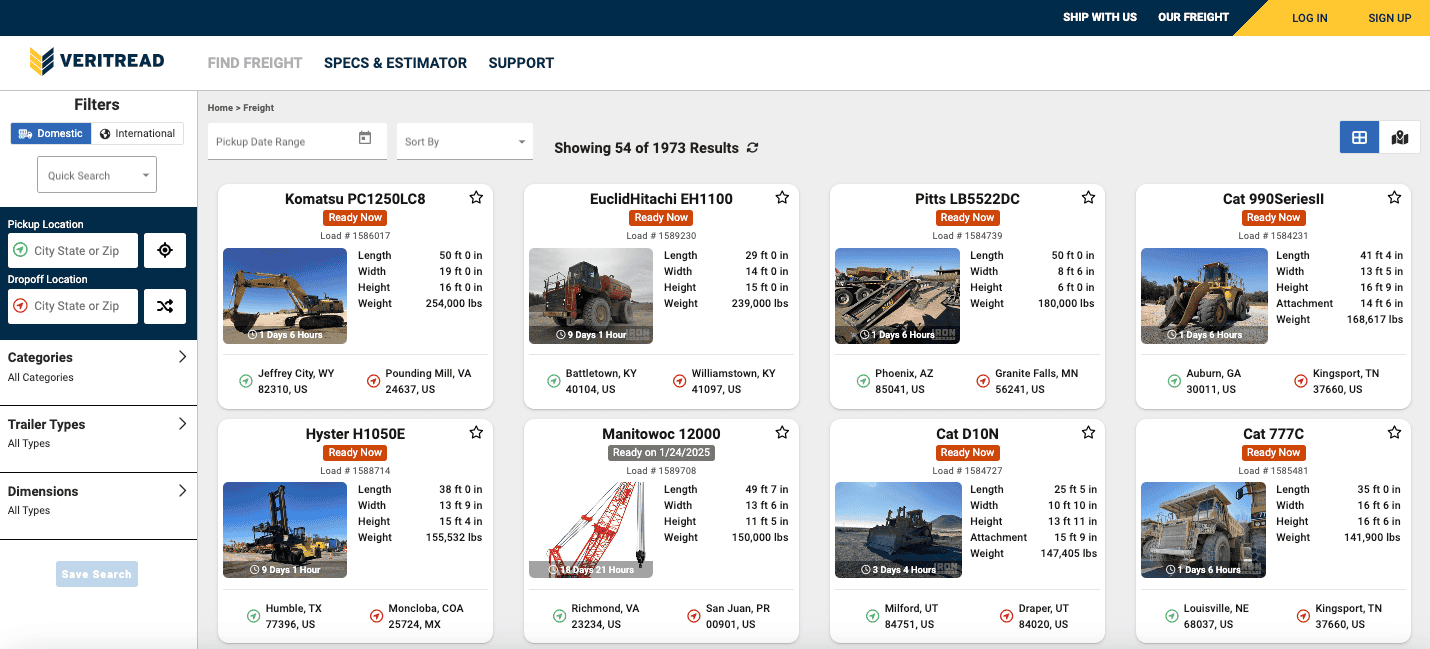
VeriTread Specs & Estimates and the VeriTread Shipper workflow can help you gather load details and request quotes from vetted transport providers. To get started, follow these steps:
- Select Ready To Ship from the Freight Options Page
- Enter a Manufacturer & Model
- Verify or Edit Your Machine Dimensions
- Enter Pickup & Drop Off Locations
- Review your quote request details and submit
veritread products
Top Articles
Freight Types
recent posts
January 17, 2025
Understanding Equipment Transport Services
When you need to move heavy machinery, large vehicles, or other specialized equipment, finding the right transportation service can
January 17, 2025
Understanding Load Board Prices
Quick answer: Load board prices usually depend on the access level you choose, the search and rate tools included, broker-vetting
January 17, 2025
Choosing the Best Equipment Hauling Companies
Quick answer: Equipment hauling companies move heavy machinery, construction equipment, farm equipment, and oversized loads by matching the shipment to